Table Of Content
That’s a huge leap for technology—and it’s transforming how many industries operate. Then, list out all the information related to the product a customer might need to know. Write a headline to advertise the product and attract online traffic. Begin by studying the product’s features, and use those to determine the benefits it offers to customers. Write your product description around benefits – the desirable outcomes customers experience once they buy your product.
Editorial eBook: Francis Scott Key Bridge Collapse
Each extension has documentation available that walks you through how to set up and use it. And if you have any questions, you can reach out to WooCommerce support. Once you’re finished, click the blue Save button at the top right. Now, you can see your changes reflected across all of your product pages. If you’re using a block theme, you can also modify the product page template using blocks. This gives you a simple way to make changes to all of your product pages at once without having to edit any code.
It’s Time to Get Started
If your product idea doesn’t solve a user problem or meet a specific need, it’s not desirable and therefore won’t be successful. The goal of product design is to ideate, design, and iterate on products that meet a specific user need, make sense from a business perspective, and compete successfully in their given market. For example, after placing a feedback widget on your homepage, you might discover that new visitors don’t understand what your product does or the problems it solves. This way, you can take steps to showcase your product’s features directly on your homepage to get users to understand your product's value, quicker. Product design is the process of researching, ideating, developing, and iterating a successful product that meets precise user needs. It encompasses the entire journey of a product, from conceptualization to manufacturing and beyond.
What are the most important product design tools?
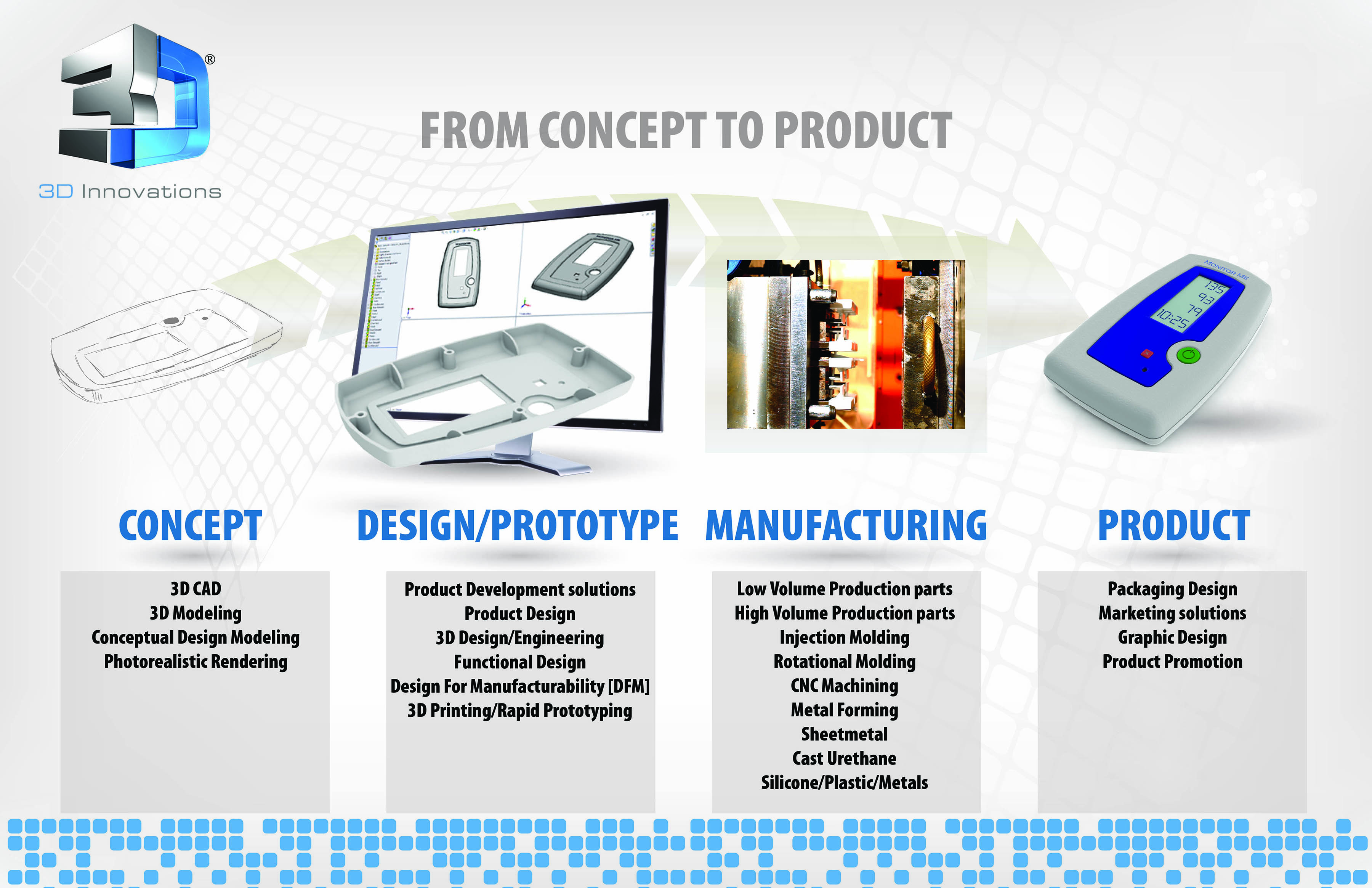
The prototype is usually printed in a pale ivory or grey colour. In some cases, the idea is large enough that it has to be either handmade or tooled up in China. In some cases, the purpose of having a prototype is to ensure the ergonomics of the product are where you intended and to make modifications if needed. A prototype might also be used for photos, presentations, and marketing. In these cases, the 3D printed model gets finished to look like the real, functioning product.
There are many different courses available depending on the skills you want to learn—from UX design courses and UI design courses to design thinking programs and tool-specific tutorials. The main takeaways are to make the process user-centered, apply design thinking, and execute it as a non-linear, iterated process. Do user research whenever possible to design with the people, not just for them. The output of sketching is a wireframe, which is basically the skeleton of our upcoming prototypes — a barebone, static structure that will soon evolve into a refined design. A blank paper and a pencil are all we need, but using mock-ups for guidance can be helpful. Wireframes can also be made on digital platforms, using tools such as Axure, Adobe XD, Sketch, Figma, or even Photoshop.
It’s how you’ll design everything from user interfaces to icons. You might also use it to create simple prototypes and animations. And it plays a big role in your workflow when it comes time to hand interface designs off to the development team. In relevant circles, product design skills are often represented with “T.” We’re talking about the shape here, not the letter. The horizontal line represents the broad set of skills required.
Product Landing Page Design: What Needs To Be Included? - NeilPatel.com
Product Landing Page Design: What Needs To Be Included?.
Posted: Tue, 16 May 2023 19:04:33 GMT [source]
For example, when a UX designer sketches a top-level menu to help users understand where they are on a website, they’re practicing information architecture. Spending time and money on vision creation is a worthwhile investment because this phase sets the stage for the success of a product. While certainly not as fast as sketching, wireframes are also useful. They’re low-fidelity mockups that represent the product’s structure, layout, and design hierarchy. They’re good for showing stakeholders early design direction as well as for collaborating with cross-functional teams, such as engineers and visual designers. They’re especially handy for distributed teams working remotely.
It begins with extensive research to empathize with the target audience before moving on to ideation, design, and testing. In the context of product design, a successful product is one that fills a gap in the target market, helps to meet business objectives, and solves a specific problem for the people who will use it. The process doesn’t end once the product has been launched, either! Throughout the product’s lifetime, the product designer will continue to monitor its performance, to gather user feedback, and make changes and improvements. The product design process doesn’t end with the design of the product. Product designers collaborate closely with engineers and developers (or manufacturers, in the case of physical products) to carry the product through from prototype to launch.
Iterative Design and Feedback Loop
So your marketing must be very clear about how potential customers can reach you, where to find you, and how to buy from you. Keywords are the terms your target audience uses when looking for products you offer. By doing some research into how customers are searching and the terms they’re using, you can learn what kinds of phrases to include on your product pages. Sometimes your customers have quick questions that just need to be answered, right now.
Many product design skills are transferable and can be acquired through unrelated career paths and life experience. Either way, all product design skills can be learned and improved—and we’ll show you how towards the end of this guide. To create the first draft of our roadmap, we start every product design process with a kick-off workshop. At this time, we get to know the company, its processes, the roles and gather all information we can about the project. Product discovery is the first phase of every human-centered product design process. Its purpose is to base the digital product idea on actual demand.

With the latter, the chances are somebody else is using them already, and you lose the uniqueness of the product. Now that we’ve looked at the levels of the product designer career path, let’s look at some ways you can ensure you keep growing in the role. I’ll start with the basics—explaining exactly what a product designer does. I’ll then look at the typical levels in a product designer career path and roughly when you can expect to reach each one.
Depending on the stage of the design process and the goals of the prototype, you’ll need to select the appropriate prototyping technique. It’s crucial to choose the method of prototyping that minimizes work and maximizes learning. Design sprints are a process of quickly creating a product’s future state, be it a website or app, and validating it with a group of users, stakeholders, developers and other designers.
In his free time, John likes chasing his toddler son around, hiking, and staying up too late to watch his beloved Liverpool FC. Ok, so now that we’ve looked at pointers for creating your career plan and being prepared for some of the different ways it might unfold, it’s time to wrap things up with a few key takeaways. But in the meantime we’ve put together five tips—they’re a mix of ideas that can help you not just create a career plan, but also be prepared for inevitable ups and downs your career will bring.
If an idea is good, it will survive to the later stages of the development process. Pay special attention to the uniqueness of your product and how it will stand out from the competition. The key lies in balancing the speed of iterations with thorough analysis of user data – allowing you to get closer to good product design that solves target markets’ problems effectively.
Journey maps can vary considerably depending on product complexity, context, and the team’s goals. In its simplest form, a user journey map demonstrates a single user path for a given scenario. More complex journey maps can show various experiences across different sessions and scenarios. The product’s vision serves as the North Star for the product team. It’s what guides them to the finish line and eventually gets the product out the door.



No comments:
Post a Comment